Friday, November 9, 2012

Home Land by Sam Lipsyte

Home Land by Sam Lipsyte
published by Picador
229 pages

Along with George Saunders, Sam Lipsyte is one of the funniest American writers around, not to mention the most honest. I've got a galley of his new story collection, "The Fun Parts", and I'm sure it won't disappoint.

"Haven't you all settled, weighed the trade-offs, shaved down your desires for what was there, what worked, what wasn't actively bent on your destruction? Resigned yourselves to the ear hair, the nipple hair, the watery farts, the fat behind the knees? The shoes in the doorway, the dishes in the sink? Isn't that what love is about? Don't the experts tell us so? Don't the people on the street concur? Don't we all settle, barter our fevers for a partner, a mutual fondler, a talking animal companion?" pg. 117 from "Home Land"

Wednesday, April 4, 2012

Not That You Care But...

But here are some books that I recently bought:

The Duel by Anton Chekhov
The Verificationist by Donald Antrim
As I Lay Dying by William Faulkner
Playing for Keeps: Michael Jordan and the World He Created by David Halberstam


Tuesday, March 20, 2012

Review: The Pale King by David Foster Wallace

The Pale King by David Foster Wallace
published by Little, Brown
547 pages

I've been putting off reading The Pale King for mainly two reasons: I had just finished re-reading Infinite Jest around the time it was published and also, the more obvious reason, this would be the last piece of fiction that was more or less sanctioned by DFW. So reading it has that bittersweet quality.

Like baseball stats and steroids, The Pale King should always have an asterisk next to it. And Little, Brown knows that, and Michael Pietsch knows it, and every DFW should know that too. There are maybe 200 cumulative pages or so that are startlingly good. The rest of the book is a bit unpolished...but as a DFW fan, I'm glad it was still there. And the unpolished stuff isn't even "bad", it's just not up to the ridiculous standard that DFW had left behind.

It stands up against any "finished" novel out there in the book market and is certainly worth reading. And not to say that The Pale King drove DFW to suicide because that would be stupendously naive, but I could see that finishing The Pale King would have seemed like a monumental task as he was essentially writing a novel without action, where the action was mostly hinted at and that he was taking an enormous risk with this project and when asked about it by his editor, Michael Pietsch, he likened working on it to carrying a sheet of plywood in a windstorm.

So if we were to take a step back as critic and try to ponder what he was actually trying to accomplish, using a template of tax code and boredom and systems of systems to try and communicate real truths about life and happiness and love...I don't know. He astounds me and I will continue to use his work as a lighthouse.

Also, here are a list of some of the surnames that were used throughout The Pale King: Eyckz, Moeller, Van Noght, Rath, Candelaria, Geach, Acquistipace, Nugent, Witkiewicz, Biron-Maint, Neti-Neti, Shearwater, Friedwald, De Chellis, Gastine, Sabusawa, Drinion, Drtiz, Keck, Bondurant, Krody, Haight, Sylvanshine, Lehrl, Satterthwaite.

Are you kidding me with these? Brilliant.

“This, according to the fellows who saw me as fit for a Service career, put me ahead of the curve, to understand this truth at an age when most guys are starting only to suspect the basics of adulthood--that life owes you nothing; that suffering takes many forms; that no one will ever care for you as your mother did; that the human heart is a chump.”

Monday, March 5, 2012

Review: The Lifespan of a Fact

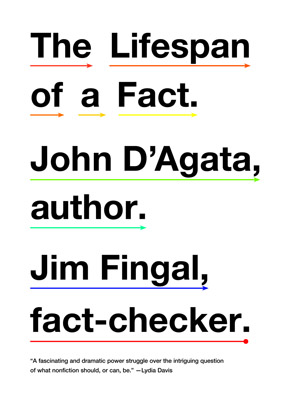
The Lifespan of a Fact by John D'Agata (and Jim Fingal, fact-checker)
published by W.W. Norton
123 pages

Wow. Let's just start with that one word. Moving on, this slim "book" is unlike anything you've ever read. It's a sort of companion piece to the astoundingly good About a Mountain (also by D'Agata). About a Mountain was originally an essay that was later fleshed out into a book. The Lifespan of a Fact is the story of that original essay but really it's about fact-checking, but no, it's really really about truth vs. accuracy, but seriously it's really about Art and Literature and the failings of Genre Labeling and Nonfiction and suicide and James Frey but it's also about everything.

(Just for clarity, the book is structurally set up in a unique way, where the center of each page has a section from the essay that Jim Fingal (the fact-checker for The Believer) is examining and then as a kind of border to that text is Jim's own comments on what he feels needs to be verified and sometimes John (the author) responding to Jim's accusations.)


My first thought was, "This is brilliant and this is going to be amazing." About 20 pages in my thought was, "This is getting a little repetitive but it's still interesting and surprisingly addictive." Then I kept reading, a chapter or two a night (they're pretty short) and then I powered through and read like four chapters because John (the author) and Jim (the fact-checker) were really getting into it ("it" being an argument/discussion/pissing match/exploration). And then the last six pages or so is just John and Jim going back and forth, trying to really get at something True and Real about Art and Literature and it ends beautifully.

I believe this will go down as one of the most important books of its time. It will be taught and studied. It will appear on every Nonfiction course syllabus.

Tuesday, February 7, 2012

Review: Pulphead by John Jeremiah Sullivan

Pulphead by John Jeremiah Sullivan
published by FSG Originals
365 pages

This is a generous four stars. The essays were solid, often brilliant, but more than a few were average, near boring. Favorites include 'Upon this Rock', 'Getting Down to What is Really Real', 'Violence of the Lambs', and 'Peyton's Place'. It's a decent essay collection but the praise on the back gets a little out of hand, as do most blurbs. Wells Tower calls it the "most inspired book of essays since DFW's A Supposedly Fun Thing I'll Never Do Again. A bold claim.

Thursday, January 19, 2012

All Human Existence is a Trick of Light

The Angel Esmeralda (Nine Stories) by Don DeLillo
published by Scribner
211 pages

I guess there's a reason this is DeLillo's first and only story collection. I'd say 3 1/2 of these stories are worth reading. The title story is taken from his excellent epic Underworld and is the strongest story by far. Human Moments in WWIII is also great. Anyway, DeLillo has turned into a philosopher-poet. So there's that. I just need to stick to his earlier work. I still have Great Jones Street, Endzone, and Ratner's Star to read.


Wednesday, January 11, 2012

Et in Arcadia Ego

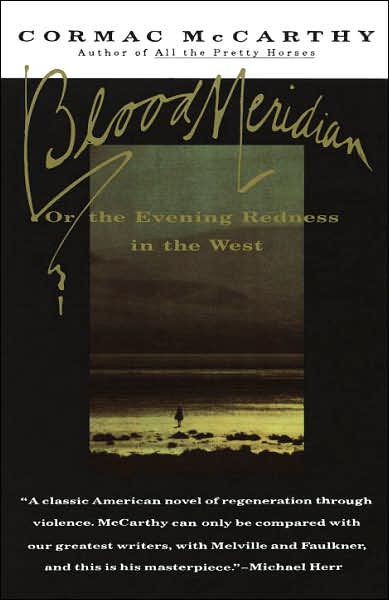
Blood Meridian or The Evening Redness in the West by Cormac McCarthy
published by Random House
337 pages

I am nearly 30 years old and I've just finished Blood Meridian for the first time. I'm glad I waited this long because I don't think I could have handled it in my younger years. Never has a work of literature left me so spent and speechless. It was slow going and most days I almost dreaded the thing. Not because it wasn't enjoyable...well, hell, I don't think Blood Meridian can be enjoyable. What I mean to say is that the writing is stunning and this is clearly a monumental work of American literature and certain scenes in the narrative will be buried in my heart and brain forever, but I found only despair and dark pleasures.

The dread I felt came from The Judge and the evilness of the book. I can't remember ever having been terrified of a literary figure. And make no mistake, Blood Meridian is a terrifying work. And I have nothing left to say.

 "For this will to deceive that is in things luminous may manifest itself likewise in retrospect and so by sleight of some fixed part of a journey already accomplished may also post men to fraudulent destinies." pg 120


Thursday, December 1, 2011

Review: The Year of Magical Thinking

The Year of Magical Thinking by Joan Didion
227 pages
published by Vintage

It's hard not to like Didion's writing style. It's lyrical and thoughtful. Cyclical yet straightforward. And especially with this book, you just want to give her a hug. Her ruminations on her husband's death border on the cliche but she gives grief new literary life with her obsessive excavation of her memories of the night her husband died.

Sunday, November 20, 2011

Review: Hot Pink by Adam Levin

Hot Pink by Adam Levin
256 pages
published by McSweeney's

I haven't read Levin's The Instructions yet but it's on my bookshelf and after reading through a galley of his first story collection, Hot Pink, I'm eager to dive into His Big Book. Though the influence of George Saunders comes through from time to time, Levin's stories are something else entirely. Violence is commonplace. Love is sincere but confusing and misguided. And of course they're all funny.

Review: Habibi by Craig Thompson

Habibi by Craig Thompson
672 pages
published by Pantheon

Brutal and beautiful. The sprawling narrative is a tad overwhelming but forgivably so. But seriously, the artwork is pretty astounding. Thompson is mostly known for his book of equal heft, Blankets, which is a great graphic novel in its own right but Habibi is clearly his most mature and imaginative work to date.

Monday, November 7, 2011

Coming of Age in Hollywood

A Way of Life, Like Any Other by Darcy O'Brien
155 pages
published by New York Review of Books (Classics)

The charm of this slim book comes almost entirely from the narrator. He is young, intelligent, brash, observant, funny and a son of Hollywood.

I enjoyed the novel all the way through but the last few chapters is what did it for me. It is essentially a coming-of-age story and O'Brien gives us an ending that is both open ended and undeniably satisfying.

NYRB Classics rock.

Thursday, October 27, 2011

By All Accounts I Should Love Philip Roth


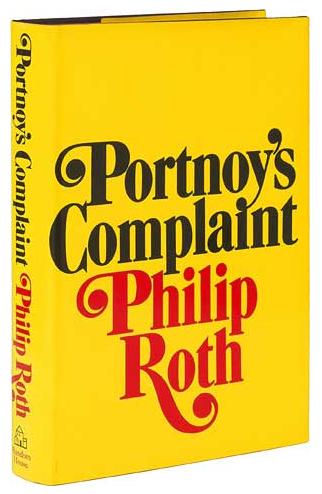
Portnoy's Complaint by Philip Roth
274 pages
published by Random House

I've never really understood why I don't like Philip Roth. It seems that I would. But I've read American Pastoral and most recently Portnoy's Complaint and I'm still luke-warm about him. I guess I was expecting to enjoy him because of his storied neuroticism but maybe I've become tired of that dance.

Roth has great moments but I feel they are few and far between. This novel is sexually outrageous and sometimes funny but ultimately forgettable.

Friday, October 7, 2011

Andrew Bird, NORMAN soundtrack


Listen to the new score by Andrew Bird for the film NORMAN on his Facebook.

Tomas Transtromer Wins Nobel, Saves World From Total Destruction


The Swedish poet, Tomas Transtromer (pictured above) just won the Nobel prize for literature. And no one in America has ever heard of him. I can poke fun at him because I'm half Swedish. It's okay. We're cool. Me and Tomas are cool.

Sunday, September 18, 2011

Another New Book for Me!

Just picked this up. Super excited.


Short Letter, Long Farewell by Peter Handke

Friday, September 16, 2011

New Books for Me!

Some books I just picked up at Half Price Books after trading in some old books:

Disgrace by J.M. Coetzee
In Persuasion Nation by George Saunders
Frog by Stephen Dixon

Sunday, September 11, 2011

Audio of "The View From Mrs. Thompson's" by David Foster Wallace

On this tenth anniversary of The Horror, listen to David Foster Wallace read his essay from Consider the Lobster, The View From Mrs. Thompson's.

Saturday, September 10, 2011

All Roads Lead to Michigan

After American Salvage, Q Road is probably Bonnie Jo Campbell's strongest book. I recently interviewed this past summer for Knee-Magazine, so I had the chance to read her entire catalog.

Q Road is a novel told from multiple view points, with each chapter devoted to a single character. As the story moves along, the characters lives begin to intermingle. It is at once about a small Michigan township and of course, like any great story, it is also about the world. While the novel is heavy on characters, Campbell doesn't take the easy way out and leave readers with no plot to latch onto. Let's just say it involves fire.

If you haven't read Bonnie Jo Campbell, then you're missing out.

Northwest Living

Livability by Jon Raymond
272 pages
published by Bloomsbury USA

I read this because it contained the basis for two films I rather enjoyed, Old Joy (titled Old Joy in the story collection) and Wendy & Lucy (titled Train Choir in the story collection). Overall the stories were kinda middle-of-the-road. Characters tended to be a bit flat and sometimes the stories felt a bit MFA-ish. There was just an overarching tone or voice that I feel I've been reading in contemporary American fiction and I don't like it.

But check out the two films directed by Kelly Reichardt. They're excellent. She also directed the recent Meek's Cutoff, which looks amazing and I think Jon Raymond did the screenplay.

I had high hopes because the movies were so great, but I really shouldn't compare the two. I also picked up his novel, Half-Life, so maybe that will be better.

Tuesday, August 2, 2011

He's A Poet and He Doesn't Even Know It

Love-Lies-Bleeding by Don DeLillo
published by Scribner
112 pages

I had taken a small break from DeLillo after having read his most well known work, White Noise. I was a bit disappointed with it and figured I needed some space, so to speak. Getting back into his work, I'm reminded why I love his prose and dialogue.

Of his three plays, Love-Lies-Bleeding is the first and only I've read. It is sparse territory, taking place in the south western desert of the United States and contains only four characters/actors. The main character, Alex, is an aging artist who has just suffered from a massive second stroke and as such, is in a "persistent vegetative state." So his estranged son and ex-wife have come to convince his second, younger wife to let him die. Or help him die, which is the matter at hand. It examines issues of mercy, mortality, and what it means to actually live in this world.

Its language and dialogue are meditative. Those familiar with DeLillo will recognize his style instantly. Repetition. The naming of things. The dialogue that sounds natural but in reality, no one would ever say. The poetry of his words. It foreshadows Point Omega both in its setting, mood, and tone. Love-Lies-Bleeding doesn't differ greatly from his novels style-wise and it very well could have been just another one of his novellas. But his words still give me the chills.

Of DeLillo's 18 published works (excluding Amazons by Cleo Birdwell), I have five works left. Three novels (End Zone, Great Jones Street, and Ratner's Star) and two plays (The Day Room and Valparaiso).